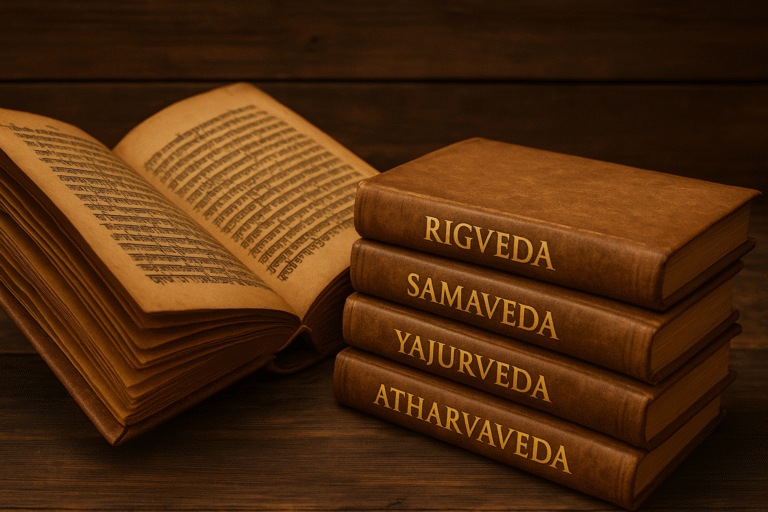
In a world dominated by artificial intelligence (AI), robotics, and advanced scientific breakthroughs, the question arises: Does ancient wisdom like Vedic knowledge still hold significance? Surprisingly, the answer is a resounding “yes.” Vedic knowledge, rooted in timeless principles and universal truths, is not only relevant but also complementary to the fast-paced, tech-driven lifestyle of the modern era.
Let’s explore how Vedic wisdom aligns with and enhances the advanced capabilities of AI and scientific approaches, creating a harmonious balance between technology and humanity.
1. What is Vedic Knowledge, and Why Does It Matter Today?
Vedic knowledge originates from the Vedas, ancient Indian scriptures written thousands of years ago. These texts cover a wide range of specialities, including:
- Health (Ayurveda)
- Philosophy and spirituality (Vedanta)
- Mathematics and astronomy (Jyotisha)
- Meditation and mindfulness (Dhyana)
- Ethics and governance (Dharma)
In essence, the Vedas provide a holistic blueprint for living a balanced and meaningful life.
Why Vedic Knowledge Matters in the Modern World:
- It offers a holistic approach to life, addressing mental, physical, and emotional well-being.
- It emphasizes sustainability and harmony with nature, crucial in today’s climate crisis.
- It promotes self-awareness and emotional intelligence, skills that are indispensable in the age of AI, where human creativity and empathy are irreplaceable.
AI and science have brought remarkable advancements, but they often lack the human touch—something Vedic principles can provide.
2. The Intersection of Vedic Knowledge and Artificial Intelligence
Artificial Intelligence excels in processing data, identifying patterns, and performing tasks with speed and accuracy. However, AI lacks consciousness, intuition, and emotional intelligence-qualities that Vedic knowledge nurtures.
How Vedic Knowledge Complements AI:
| Area | AI Capabilities | Vedic Contributions |
| Decision-Making | Data-driven, logic-based decisions | Intuition and ethical guidance through Dharma |
| Healthcare | Diagnosis using algorithms | Holistic healing via Ayurveda and Yoga |
| Mental Health | Chatbots for therapy | Meditation and mindfulness for self-awareness |
| Sustainability | Optimizing energy and resources | Emphasis on harmony with nature |
| Ethics and Bias | Struggles with ethical dilemmas and biases | Ethical frameworks rooted in Vedic philosophy |
While AI provides accessibility and personalization, the core principles of mindfulness and meditation stem from the teachings of the Vedas.
3. Vedic Mathematics and Modern Computational Science
Vedic Mathematics is a treasure trove of techniques for quick and efficient problem-solving. Developed thousands of years ago, these methods are incredibly relevant in modern computational science, coding, and AI development.
Key Features of Vedic Mathematics:
- Speed: Techniques like “Vertically and Crosswise” enable rapid mental calculations.
- Simplicity: Reduces complex problems into simple, logical steps.
- Application: Useful in algebra, geometry, and even computer algorithms.
4. Ayurveda and AI in Modern Healthcare
Ayurveda, the ancient Indian science of life, is a holistic medical system that emphasizes balance among the body, mind, and spirit. In contrast, AI-driven healthcare focuses on diagnostics, predictive analytics, and precision medicine. Together, they form a powerful synergy.
How AI and Ayurveda Work Together:
- Personalized Medicine:
- AI analyzes genetic data to predict health risks.
- Ayurveda identifies an individual’s dosha (body constitution) for tailored treatments.
- Preventive Healthcare:
- AI monitors lifestyle data through wearables.
- Ayurveda provides guidelines on diet, exercise, and daily routines (Dincharya) to prevent illnesses.
- Mental Health:
- AI chatbots offer cognitive behavioral therapy.
- Ayurvedic herbs enhance mental resilience.
5. Vedic Meditation vs. AI-Powered Mindfulness
Meditation apps powered by AI provide guided sessions, progress tracking, and personalized recommendations. However, the essence of meditation lies in cultivating inner awareness, a concept deeply rooted in Vedic traditions.
Benefits of Combining Both:
- AI: Makes meditation accessible, especially for beginners.
- Vedic Wisdom: Ensures authenticity and depth in practice.
6. Ethical AI Development Through Vedic Philosophy
As AI becomes more autonomous, ethical concerns arise-privacy violations, biased algorithms, and even existential risks. Vedic philosophy provides a moral compass for addressing these challenges.
Vedic Principles for Ethical AI:
- Ahimsa (Non-Violence): Ensuring AI is used for the greater good, avoiding harm to humanity.
- Satya (Truthfulness): Maintaining transparency in AI algorithms.
- Dharma (Righteousness): Aligning AI development with ethical and societal well-being.
7. Sustainability: Ancient Wisdom for a Modern Crisis
The Vedas emphasize living in harmony with nature, a teaching more relevant than ever in the face of climate change and environmental degradation.
Vedic Practices for Sustainability:
- Minimalism: The concept of Aparigraha (non-possessiveness) promotes sustainable consumption.
- Renewable Energy: Ancient texts describe solar energy as a vital force, inspiring modern renewable energy initiatives.
- Ecological Balance: Practices like planting sacred trees (e.g., Banyan, Peepal) help maintain biodiversity.
Modern Integration:
AI-driven tools now optimize energy use and reduce waste. Combining these with Vedic principles of sustainability creates a balanced approach to environmental stewardship.
8. Emotional Intelligence: The Vedic Edge in an AI World
While AI can mimic human emotions, it cannot truly understand or experience them. Emotional intelligence (EQ) remains a uniquely human trait, and Vedic teachings provide a framework for developing it.
Vedic Practices to Enhance EQ:
- Self-Reflection (Swadhyaya): Cultivating self-awareness.
- Compassion (Karuna): Building empathy through meditation and mindfulness.
- Detachment (Vairagya): Managing emotions effectively by letting go of attachments.
9. The Future of Humanity: A Balance Between AI and Vedic Wisdom
As AI continues to evolve, the need for balance becomes paramount. Vedic wisdom offers a counterbalance to the mechanization of life, ensuring that humanity retains its essence amidst technological advancements.
Key Takeaways:
- AI and Vedic knowledge are not mutually exclusive; they complement each other.
- Vedic principles provide the ethical, emotional, and spiritual grounding that technology lacks.
- Integrating both can lead to a more balanced, sustainable, and fulfilling future.
Some questions you may have
Q1: Can AI fully replace the need for Vedic knowledge?
Ans: No, AI lacks the consciousness and ethical grounding that Vedic knowledge provides. Both are complementary.
Q2: How can I integrate Vedic practices into my tech-driven life?
Ans: Start small: meditate daily, adopt a sustainable lifestyle, and practice mindfulness.
Q3: Are there any conflicts between Vedic knowledge and modern science?
Ans: Not at all. Vedic knowledge often complements modern science, offering holistic perspectives and ethical insights.
In a world increasingly driven by AI and scientific advancements, Vedic knowledge remains a beacon of timeless wisdom. By integrating ancient principles with modern technology, we can create a future that is not only innovative but also humane, ethical, and sustainable.